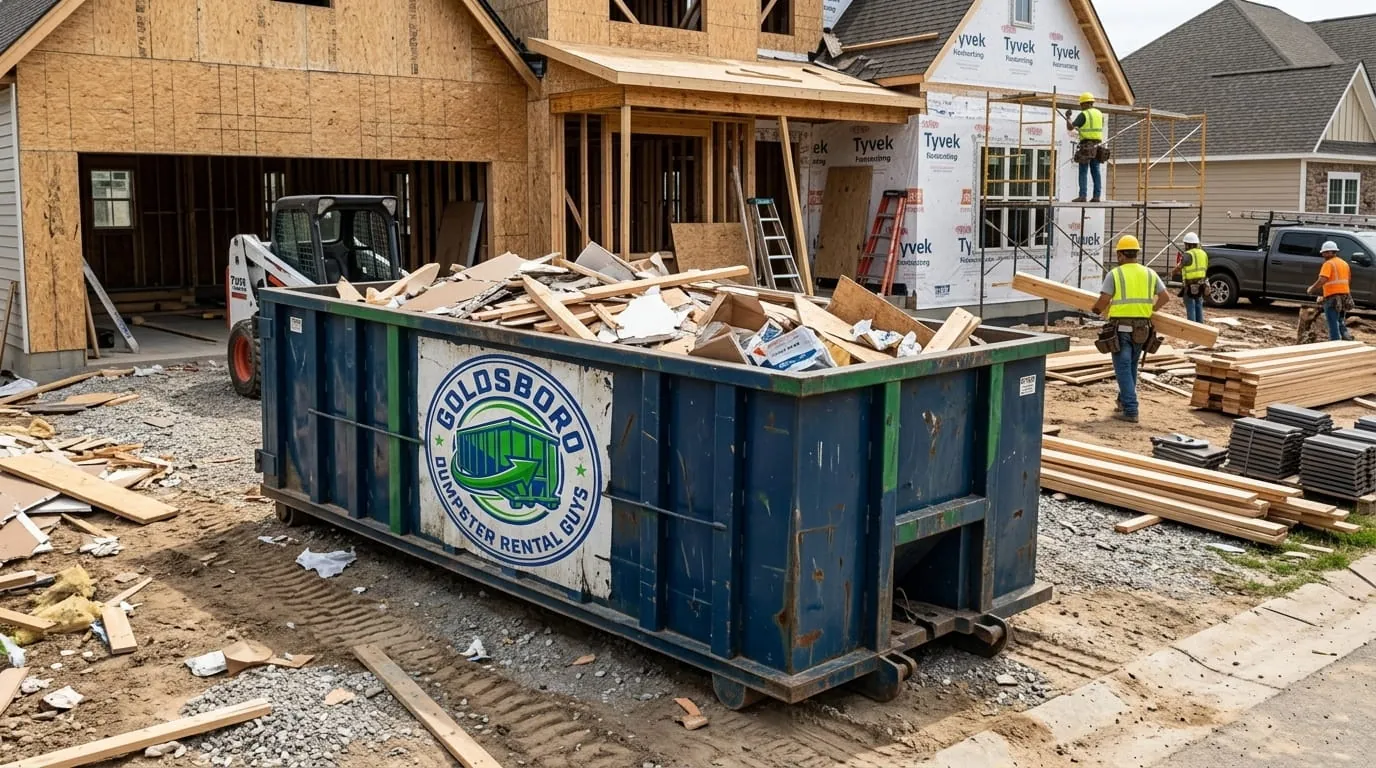
Whether you are cleaning out a garage off Ash Street, gutting a kitchen in a mid-century ranch, or hauling branches to the curb after a storm blows up the Neuse River, knowing how waste and recycling actually work in Goldsboro saves you time, money, and the occasional rejected load. This guide walks through the systems that handle trash, recyclables, bulky items, hazardous materials, and construction debris across the city and Wayne County, and explains where renting a roll-off dumpster makes the most sense. Because programs, fees, and collection days change, treat the specifics here as a starting point and confirm current details with the City of Goldsboro, Wayne County, and the North Carolina Department of Environmental Quality (NC DEQ) before you haul anything.
How Curbside Collection Works in the City of Goldsboro
If you live inside the Goldsboro city limits, the City handles your weekly household trash and recycling collection. Residents are typically issued a roll-out cart for garbage and a separate cart or bin for recyclables, with pickup on a set day of the week based on your neighborhood. The garbage cart is meant for normal household waste. The recycling cart is for accepted single-stream items, which in most North Carolina programs include clean cardboard and paperboard, mixed paper, aluminum and steel cans, and plastic bottles and jugs. Glass acceptance varies by program and processor, so it is worth confirming whether glass belongs in your cart or at a drop-off point.
A few habits keep your service running smoothly. Set carts out the night before or early on collection morning, keep lids closed, and leave a few feet of clearance around each cart so the automated truck arm can grab it. Keep plastic bags out of the recycling cart, since film plastic jams sorting equipment at the materials recovery facility; take grocery bags and bubble wrap back to a store drop-off instead. When in doubt about an item, the old rule holds: if you are not sure it is recyclable, put it in the trash rather than contaminate a whole load. Holiday schedules shift pickup days, so check the City calendar around major holidays.
Bulky Items and Yard Waste at the Curb
The City also runs programs for the things that do not fit in a cart. Bulky items such as furniture, mattresses, and some appliances are usually collected on a scheduled or call-in basis rather than thrown in with weekly trash. Yard waste, including leaves, grass clippings, and limbs, is typically handled on a separate route or seasonal schedule and is kept out of the landfill so it can be composted or mulched. There are limits on volume, bundle length, and what counts as yard waste versus construction material, so a large landscaping job or a whole-yard cleanup often exceeds what curbside will take in a single week. That is a common tipping point where a dedicated container becomes the easier path.
The Wayne County Landfill, Transfer Station, and Convenience Centers
Beyond the curb, Wayne County operates the solid waste infrastructure that serves the whole area, including residents outside city limits who do not receive municipal collection. The county system generally includes a landfill or transfer station where larger volumes are accepted, along with a network of convenience and recycling drop-off centers spread around the county. Convenience centers are designed for residents to drop off household garbage and sorted recyclables, and they are especially useful for people in rural parts of Wayne County who haul their own waste.
These facilities have rules worth knowing before you load the truck. Expect posted hours, residency or sticker requirements at some sites, and tipping fees charged by weight or load for certain materials, particularly construction and demolition debris. Not every center accepts every material; a small drop-off may take household trash and common recyclables but direct you to the main landfill or transfer station for large loads, tires, appliances, or C&D waste. Call ahead or check the county website to confirm hours, accepted materials, and fees for the site nearest you, and to find out whether your load needs to go to a specific facility.
Construction and Demolition Debris Diversion
Renovation and demolition projects generate a different waste stream than everyday household trash. Drywall, lumber, flooring, old cabinetry, roofing shingles, concrete, brick, and fixtures are classified as construction and demolition (C&D) debris and are handled separately from municipal solid waste. Much of it can be diverted rather than simply buried. Clean wood can be chipped, metal is valuable as scrap, and concrete and masonry can often be crushed and reused as fill or aggregate. Asphalt shingles sometimes have recycling outlets depending on what processors in the region are accepting.
For most homeowners and contractors, the practical way to manage C&D debris is a roll-off dumpster sized to the job. Separating recyclable metal and clean wood before the rest goes in the container cuts disposal weight and may lower your costs, since C&D is often charged by the ton. If you are planning a project and want to understand what belongs in the box, our guide on what can go in a dumpster and our walkthrough on how to dispose of construction debris cover sizing, weight, and prohibited items in detail.
E-Waste and North Carolina's Landfill Bans
North Carolina has banned several materials from disposal in landfills, and electronics are near the top of the list. State law prohibits landfilling computers, monitors, and televisions, which means you cannot simply throw a dead TV in your cart or drop it at a convenience center as regular trash. These items must go to designated e-waste collection points, which Wayne County typically provides at the landfill or specific drop-off sites. The goal is to recover metals and keep lead, mercury, and other components out of the ground.
The banned-materials list is broader than electronics. Common items kept out of North Carolina landfills include:
- Televisions, computers, and monitors (mandatory recycling)
- Aluminum cans, in many programs, as a recyclable
- Whole scrap tires, which have their own disposal process and fees
- Used motor oil, oil filters, and antifreeze
- Lead-acid vehicle batteries
- White goods such as refrigerators, washers, and other large appliances
- Wooden pallets and, in many cases, yard trash
Appliances that contain refrigerants, like refrigerators, freezers, and window air conditioners, require professional refrigerant recovery before they can be processed, so they go to a designated area rather than a general dumpster. Because the list and the handling rules carry legal weight, confirm the current banned-materials guidance with NC DEQ and Wayne County, and keep these items out of any roll-off container unless your provider has told you they can take them.
Household Hazardous Waste
Paint, solvents, pesticides, pool chemicals, automotive fluids, fluorescent bulbs, and similar products are household hazardous waste (HHW) and should never go in your trash cart, down a storm drain, or into a dumpster. In the Goldsboro area, these materials are generally handled through periodic collection events or a designated drop-off program rather than regular curbside pickup. Because dates and locations for HHW events change throughout the year, do not rely on a fixed schedule; check with the City of Goldsboro and Wayne County for the next collection event and for any permanent drop-off options. Until you can dispose of them properly, store hazardous products in their original labeled containers, away from heat and out of reach of children and pets. Latex paint can often be dried out with hardener or kitty litter and disposed of once solid, but oil-based paint and true solvents still need HHW handling.
Yard and Storm Debris After Hurricanes and Severe Weather
Eastern North Carolina knows hurricane season well, and Goldsboro sits where the Neuse River and surrounding creeks can rise fast. After a major storm, the volume of downed limbs, whole trees, fence sections, and water-damaged household goods can overwhelm normal collection. In a declared disaster, the City and County often organize special debris pickups, sometimes asking residents to separate vegetative debris, construction debris, appliances, and household hazardous waste into distinct piles at the curb so crews and contractors can collect each stream efficiently. Follow those sorting instructions closely when they are issued, because mixed piles are collected last.
For everyday storm cleanup that does not rise to a declared event, you are usually on your own to haul limbs to a convenience center or to rent a container. A roll-off dumpster is a strong fit when a storm leaves you with a mountain of branches plus soggy carpet, drywall, and ruined furniture from a flooded room, because it keeps everything in one place and off the street while you work. If the job is mostly vegetation, our yard waste removal service may be the cleaner option.
Protecting the Neuse River Watershed
Everything that washes off a Goldsboro street or job site can end up in a creek and, eventually, in the Neuse River. Construction sediment, loose debris, spilled fuel, paint rinse water, and improperly dumped chemicals all degrade water quality downstream and can harm the fisheries and wetlands the lower Neuse is known for. Keeping a tidy site is not just about appearances. Use covered containers so wind does not scatter lightweight debris, never hose paint, concrete slurry, or solvents into a storm drain, and stage materials away from ditches and swales. A roll-off dumpster with a fitted or tarped load contains debris far better than an open trailer or a curbside pile, which is one more reason containerized disposal is the responsible choice for larger jobs near the water.
When a Dumpster Is the Right Call
Curbside carts and convenience centers cover routine life. A rented dumpster earns its keep when the volume, weight, or timeline outgrows those options. Common Goldsboro scenarios include whole-house or estate cleanouts, kitchen and bath remodels, roof tear-offs, flooring replacements, garage and attic decluttering, and large landscaping overhauls. Instead of making a dozen trips to the county facility or waiting weeks for curbside bulky pickups, you fill one container on your schedule and have it hauled when it is full.
Right-sizing matters. A 10 or 15 yard container suits a single-room remodel or a focused cleanout, a 20 yard box fits most mid-size renovations and roofing jobs, and a 30 or 40 yard container handles large construction and full-property clearouts. Heavy debris like concrete, dirt, and shingles has weight limits, so those loads often go in a smaller box than their appearance suggests. If you are weighing a dumpster against hauling, our residential dumpster rental and junk removal pages explain the differences, and you can browse everything we offer on our services page. When you are ready to talk through sizing, placement, and prohibited materials for your specific project, reach out through our contact page or call us directly.
Handled thoughtfully, waste disposal in Goldsboro is straightforward: sort what you can, keep banned and hazardous materials out of the landfill and out of the watershed, lean on the City and County systems for routine needs, and rent a container when a project outgrows the curb. Call Goldsboro Dumpster Rental Guys at (984) 305-2117 and we will help you keep your Goldsboro cleanup clean from start to finish.
Owner, Goldsboro Dumpster Rental Guys — sharing straight advice from years of local hauling across Goldsboro and Wayne County.
Frequently Asked Questions
What goes in my City of Goldsboro recycling cart?
Most Goldsboro single-stream recycling accepts clean cardboard and paperboard, mixed paper, aluminum and steel cans, and plastic bottles and jugs. Keep plastic bags, film, and food-soiled items out, since they contaminate loads and jam sorting equipment. Glass acceptance varies, so confirm current accepted materials with the City of Goldsboro before tossing questionable items in the cart.
Where do I take items that cannot go in the trash, like TVs and appliances?
North Carolina bans electronics such as TVs, computers, and monitors from landfills, along with tires, motor oil, vehicle batteries, and large appliances. These go to designated e-waste and special-handling points, typically at the Wayne County landfill or convenience centers rather than in your cart or a dumpster. Check with Wayne County and NC DEQ for the correct drop-off site and any fees.
How do I dispose of household hazardous waste in Goldsboro?
Paint, solvents, pesticides, pool chemicals, automotive fluids, and fluorescent bulbs should never go in your trash, down a drain, or in a dumpster. The Goldsboro area handles these through periodic collection events or designated drop-off programs. Dates and locations change, so contact the City of Goldsboro and Wayne County for the next event, and store products in their original labeled containers until then.
Can I put construction debris in a dumpster, and how is it handled?
Yes. Drywall, lumber, flooring, cabinetry, shingles, concrete, and brick are construction and demolition debris and are well suited to a roll-off dumpster. Separating scrap metal and clean wood for recycling before loading can cut weight and cost, since C&D is often charged by the ton. Heavy materials like concrete and shingles have weight limits, so ask about the right size for your load.
What should I do with storm and yard debris after a hurricane?
In a declared disaster, the City and County often run special pickups and ask residents to separate vegetative debris, construction debris, appliances, and hazardous waste into distinct curbside piles. Follow those instructions so crews can collect each stream. For everyday storm cleanup, haul limbs to a convenience center or rent a dumpster, and keep covered loads to protect the Neuse River watershed and local creeks.