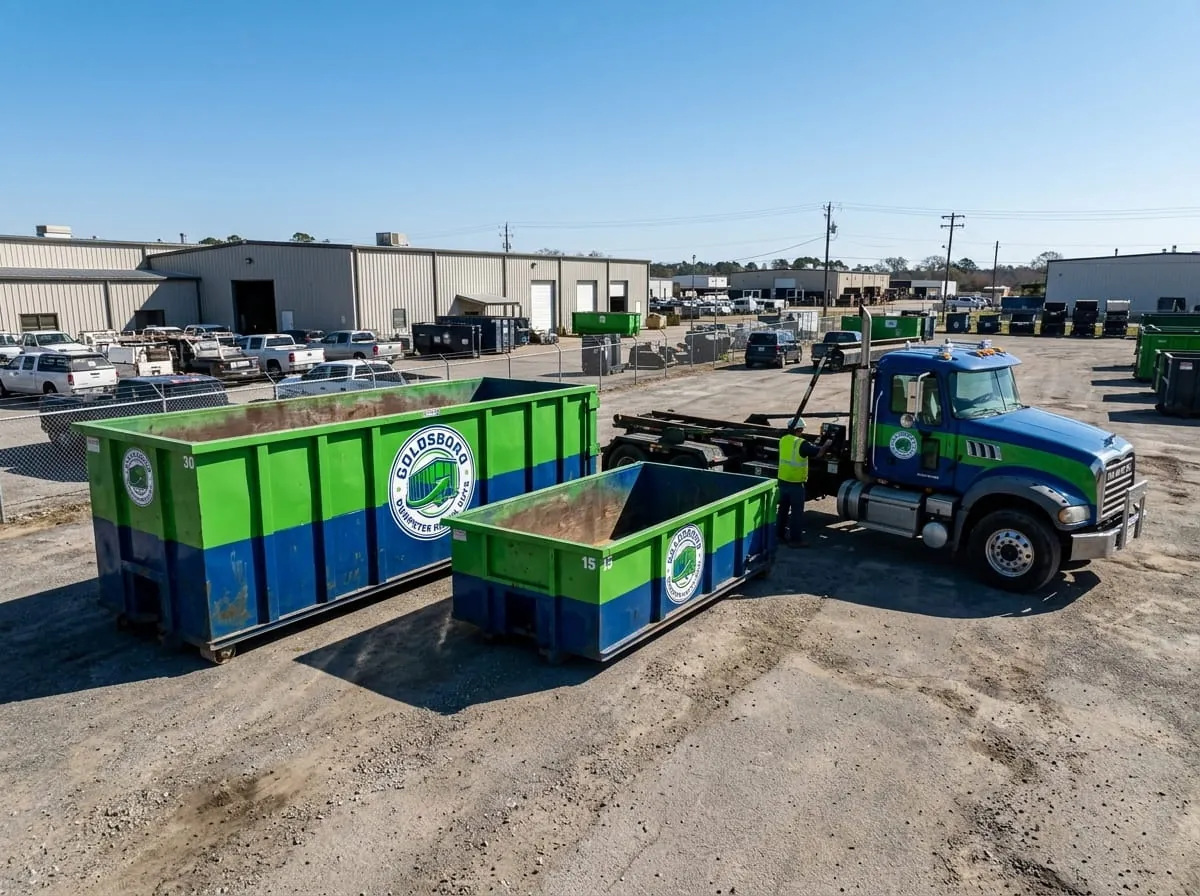
One of the most common questions we hear at Goldsboro Dumpster Rental Guys is a simple one: what can I actually put in the dumpster? It is a fair question, because tossing the wrong item can lead to overage charges, a load rejected at the Wayne County transfer station, or even a fine. North Carolina has specific disposal bans that every homeowner and contractor in Goldsboro should understand before they start filling a roll-off container.
This guide breaks down exactly what belongs in your dumpster, what is prohibited under North Carolina Department of Environmental Quality (DEQ) rules, and how to get rid of the banned items the right way here in Goldsboro and across Wayne County. If you ever have a question about a specific item, you can always call our team before you load it.
The Short Answer
If it is ordinary, non-hazardous, non-liquid solid waste, it can almost always go in a roll-off dumpster. The trouble starts with materials that are hazardous, liquid, highly flammable, or specifically banned from North Carolina landfills by state law. These bans are not arbitrary. They exist to protect groundwater, keep recyclable materials out of the ground, and prevent dangerous reactions at the landfill. When you are not sure, the safest move is to ask before it goes in the container.
What You Can Put in a Dumpster
The good news is that the overwhelming majority of what comes out of a home cleanout, remodel, or construction job is perfectly acceptable. Here are the main categories we see every day.
Household Junk and Furniture
General household clutter is the bread and butter of dumpster rental. Think old toys, boxes, clothing, non-electronic kitchenware, packaging, and general trash from a move or estate cleanout. Furniture such as couches, chairs, tables, dressers, bookshelves, and desks is also accepted. If you are clearing out a whole house and would rather not lift a finger, our junk removal service can handle the loading for you.
Construction and Demolition (C and D) Debris
Renovation and demo projects generate a lot of heavy material, and most of it belongs in the dumpster: drywall, lumber, plaster, framing, cabinetry, trim, insulation, wood, and non-hazardous building scraps. Brick, block, and small amounts of concrete are acceptable too, though they carry weight restrictions we cover below. For a deeper look at handling jobsite waste, see our guide on how to dispose of construction debris.
Roofing and Flooring
Tear-off projects fit well in a roll-off. Asphalt shingles, roofing felt, underlayment, and flashing are all accepted. So are flooring materials: carpet, padding, laminate, hardwood, vinyl plank, tile, and subfloor. Shingles are heavy, so a roofing tear-off usually calls for a dedicated size recommendation from our team to keep the load within weight limits.
Yard and Storm Debris
Eastern North Carolina sees its share of storms, and cleanup creates mountains of organic debris. Branches, limbs, brush, leaves, shrubs, and small logs are generally accepted. After a hurricane or heavy wind event, a dumpster is often the fastest way to clear a property. If your project is mostly green waste, keep in mind that clean yard debris is frequently recycled into mulch rather than landfilled, which can change how we route and price it.
Here is a quick reference of commonly accepted items:
- Household junk, trash, and general clutter
- Furniture: sofas, chairs, tables, dressers, cabinets
- Construction and demolition debris: drywall, wood, lumber, plaster
- Roofing: asphalt shingles, felt, flashing
- Flooring: carpet, tile, laminate, hardwood, vinyl
- Yard and storm debris: branches, brush, leaves, shrubs
- Brick, block, and small amounts of concrete (weight limited)
- Non-freon fixtures, scrap metal, and most non-electronic goods
What You Cannot Put in a Dumpster
Some items are strictly off-limits. A few are banned by North Carolina law from entering any landfill; others are simply too hazardous, too heavy in liquid form, or require special handling. Putting these in your container can void your rental terms and leave you responsible for disposal fees. Here is the prohibited and restricted list.
- Hazardous waste of any kind
- Wet paint, stains, solvents, and lacquers
- Chemicals, pesticides, herbicides, and pool chemicals
- Motor oil, gasoline, antifreeze, and other automotive fluids
- Tires (banned from NC landfills)
- Batteries: car, lithium, and rechargeable
- Appliances containing Freon: refrigerators, freezers, AC units, dehumidifiers
- Other white goods and large appliances (banned from NC landfills)
- Electronics and e-waste: TVs, computers, monitors (banned from NC landfills)
- Mattresses and box springs (accepted only with an added fee)
- Propane tanks and other pressurized cylinders
- Asbestos and medical waste
Hazardous Waste, Paint, and Chemicals
Paint, solvents, pesticides, cleaning chemicals, and automotive fluids are classified as household hazardous waste. They can leak, catch fire, or contaminate groundwater, so landfills will not accept them loose in a trash load. Dried latex paint is sometimes an exception, but wet paint of any kind must be kept out of the container.
Tires, Batteries, and Propane
Scrap tires are banned from North Carolina landfills because they trap gases, float to the surface over time, and become breeding grounds for mosquitoes. Lead-acid and lithium batteries contain corrosive acid and heavy metals and are a known fire risk in trash trucks and transfer stations. Propane tanks and other pressurized cylinders can explode when crushed or exposed to heat, so they are never allowed, even when you believe they are empty.
Appliances with Freon and Other White Goods
Refrigerators, freezers, window air conditioners, and dehumidifiers contain refrigerant (commonly called Freon) that must be professionally recovered before disposal under federal Clean Air Act rules. On top of that, North Carolina bans white goods (large appliances) from landfills entirely because the metal is recyclable. That means even a non-freon stove or washer needs to be routed to a metal recycler, not buried in the ground.
Electronics and E-Waste
North Carolina law bans televisions and computer equipment from landfills. Electronics contain lead, mercury, and other heavy metals, and the state requires them to be recycled through approved e-waste programs. That covers TVs, monitors, desktops, laptops, and printers, whether they still work or not.
Mattresses
Mattresses and box springs are not strictly banned, but they are notoriously difficult to compact and are increasingly diverted for recycling. Most haulers, including us, accept them only with an added handling fee. Let us know up front if you have them so we can quote the job correctly and avoid surprises.
Why North Carolina Bans These Items
North Carolina keeps a formal list of items that cannot be disposed of in municipal solid waste landfills. The DEQ landfill bans include scrap tires, white goods and other appliances, used oil, lead-acid batteries, electronics such as TVs and computers, and yard trash in lined landfills, among others. The logic is twofold: some materials are hazardous and threaten groundwater, while others are valuable recyclable commodities the state would rather keep in circulation than bury forever. For a fuller picture of how these rules shape local disposal, read our overview of recycling and waste disposal in Goldsboro, NC.
How to Dispose of Banned Items in Goldsboro and Wayne County
Being told you cannot throw something away is only half an answer. Here is how to handle the common banned items locally:
- Appliances and scrap metal: Many local scrap metal yards accept refrigerators, stoves, and washers after a certified technician recovers the Freon. The Wayne County convenience sites and solid waste department also direct residents to proper white-goods handling.
- Electronics: Use a Wayne County e-waste collection event or an approved electronics recycler to drop off TVs and computers.
- Tires: Return them to a tire retailer, who collect a disposal fee at purchase, or take them to a Wayne County scrap tire collection site.
- Paint and household chemicals: Hold them for a Wayne County household hazardous waste collection day; fully dried latex paint can often go in regular trash once it is solid.
- Batteries: Auto parts stores take lead-acid car batteries, and many retailers collect rechargeable and lithium batteries for free.
- Propane tanks: Exchange or return them to a propane supplier or hardware store.
The Wayne County Solid Waste Department is the best local authority for current hours and drop-off locations. We are also happy to point you in the right direction when you book your container.
Watch the Weight: Concrete, Dirt, and Heavy Debris
Some materials are allowed but severely weight-restricted. Concrete, brick, asphalt, dirt, gravel, sand, and stone are extremely heavy, and a dumpster filled with them can quickly exceed road-legal weight limits and the container's rated capacity. For these dense materials we usually recommend a smaller, dedicated container or a clean-fill-only load so you avoid steep overage charges. Never mix a full load of concrete or dirt into a general debris dumpster without talking to us first; mixing clean fill with trash also prevents it from being recycled. If you are planning a project heavy on masonry or soil, our team can match you with the right residential dumpster rental and weight allowance.
Still Not Sure? Ask Before You Toss
When it comes to what can and cannot go in a dumpster, a two-minute phone call can save you from fees, rejected loads, and a trip back to haul something out. The team at Goldsboro Dumpster Rental Guys knows North Carolina's rules and the Wayne County disposal network inside and out, and we are glad to walk you through your specific project. Call us today at (984) 305-2117 to get a straight answer and the right-sized dumpster for the job.
Owner, Goldsboro Dumpster Rental Guys — sharing straight advice from years of local hauling across Goldsboro and Wayne County.
Frequently Asked Questions
Can I put a refrigerator or freezer in the dumpster?
No. Refrigerators, freezers, window AC units, and dehumidifiers contain Freon that must be professionally recovered under federal law, and North Carolina bans large appliances (white goods) from landfills because the metal is recyclable. Take them to a scrap metal recycler or a Wayne County convenience site instead.
Are tires allowed in a dumpster in North Carolina?
No. Scrap tires are banned from North Carolina landfills because they trap gases, resurface over time, and collect water that breeds mosquitoes. Return tires to a tire retailer, which collect a disposal fee at purchase, or drop them at a Wayne County scrap tire collection site.
Can I throw a mattress in the dumpster?
Usually, but with an added handling fee. Mattresses and box springs are hard to compact and are increasingly recycled rather than landfilled. Tell us up front if you have them so we can include the fee in your quote and route them correctly.
What happens if I put a prohibited item in my dumpster?
Prohibited items can get the load rejected at the transfer station, trigger extra disposal fees charged back to you, and may violate your rental agreement. If you are unsure about an item, call (984) 305-2117 before you load it and we will tell you whether it is allowed.
Can I fill a dumpster with concrete or dirt?
Only in limited amounts. Concrete, brick, asphalt, dirt, and gravel are extremely heavy and can exceed road-legal and container weight limits fast. For these materials we recommend a dedicated clean-fill load and a smaller container so the debris can be recycled and you avoid heavy overage charges.