If you run roofing jobs around Goldsboro, you already know the roof itself is only half the battle. The other half is dealing with everything that comes off it. Tear-off debris is the single heaviest material we haul on a regular basis, and more than any other job type, roofing is where folks get surprised by overage fees, dropped bins that sink into a soft yard, or a dumpster that is somehow full before the second layer is even down. After years of dropping roll-offs in Wayne County driveways, I can tell you the trick is not ordering the biggest box you can find. It is ordering the right box, and knowing the weight math before the first shingle hits the ground.
Why Roofing Debris Is So Heavy
People look at a pile of old shingles and think of it like any other junk pile. It is not. Asphalt shingles are basically fiberglass or felt mat saturated with asphalt and coated in mineral granules, and all three of those ingredients are dense. A cubic yard of mixed household junk might weigh 150 to 300 pounds. A cubic yard of tear-off shingles can run 700 to 1,200 pounds, and that is before you factor in soaked underlayment, wet decking, or a layer of trapped moisture from our famous Eastern North Carolina humidity.
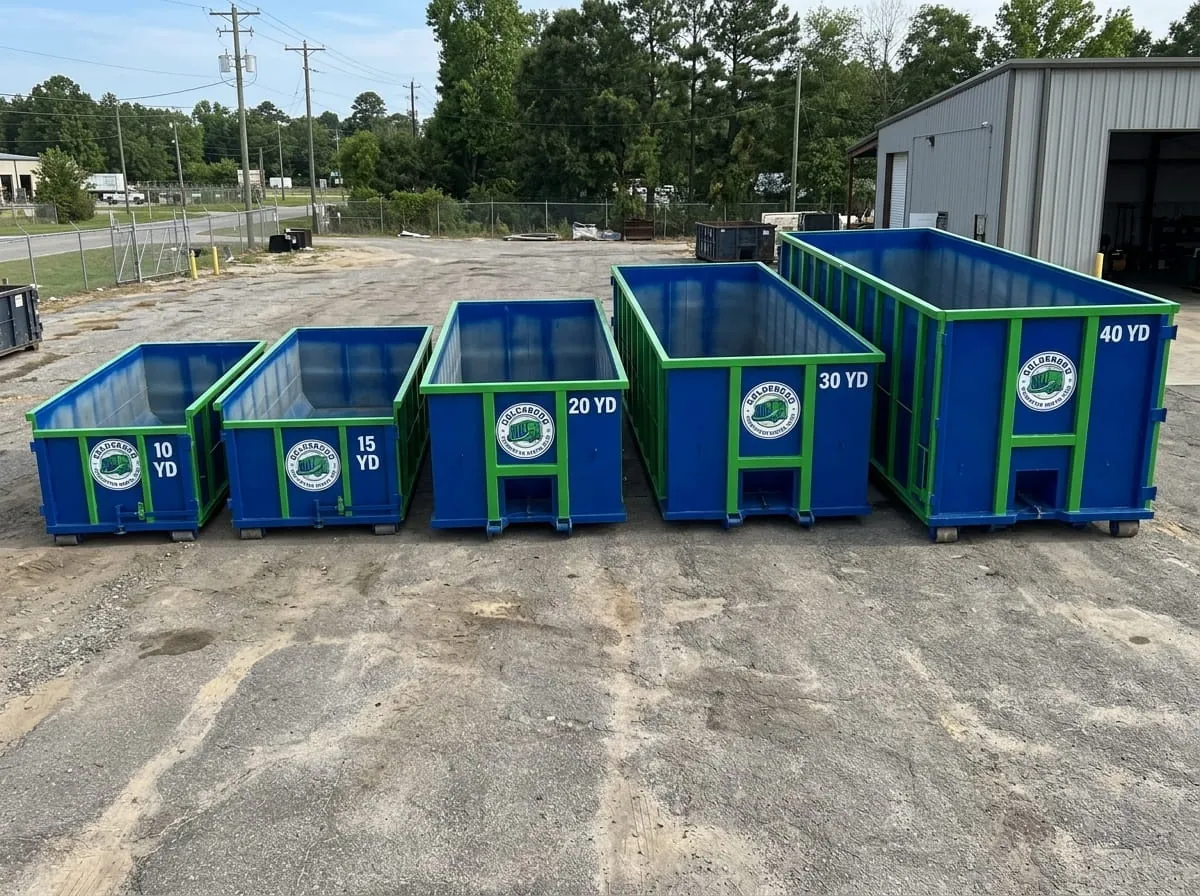
This is why roofing gets its own dedicated, smaller bin. A 20 or 30 yard box looks tempting because it holds more volume, but you will hit the weight limit long before you fill it, and then you are either paying heavy overage charges or being told the load is too heavy to legally haul. A 10 or 15 yard roll-off is sized specifically so that a full roof fits within a realistic weight allowance. That is the whole logic behind our roofing dumpster rental service, these are smaller bins built for dense material.
The Shingle Weight Math Every Homeowner Should Run
Roofers measure in squares. One square equals 100 square feet of roof surface. Shingles are sold in bundles, and it typically takes three bundles to cover one square. So if a contractor tells you the roof is 25 squares, that is roughly 75 bundles of material to tear off and haul away.
Now convert to weight. The number you need is the shingle type:
- 3-tab shingles (the older, flatter style you see on a lot of homes near downtown Goldsboro) weigh about 200 to 250 pounds per square.
- Architectural or dimensional shingles (the thicker, layered look that became standard over the last two decades) weigh about 350 to 450 pounds per square.
Here is a quick reference I give homeowners so they can size the bin before they call:
| Roof size (squares) | 3-tab (approx. tons) | Architectural (approx. tons) | Suggested bin |
|---|---|---|---|
| 10 squares | 1.0 - 1.25 tons | 1.75 - 2.25 tons | 10 yard |
| 15 squares | 1.5 - 1.9 tons | 2.6 - 3.4 tons | 10 - 15 yard |
| 20 squares | 2.0 - 2.5 tons | 3.5 - 4.5 tons | 15 yard |
| 25 squares | 2.5 - 3.1 tons | 4.4 - 5.6 tons | 15 yard (watch weight) |
Those are single-layer numbers. The moment you add a second or third layer, you multiply. A 20 square roof with two layers of architectural shingle can push 7 to 9 tons, and no single small bin is going to swallow that under a normal tonnage cap. That is a two-bin job, or a swap-out midway through the tear-off.
Estimating Your Squares Without Climbing Up There
You do not need to get on the roof to get a usable estimate. Take the footprint of the house in square feet, then account for the pitch. A low-slope ranch adds maybe 10 to 15 percent for the slope; a steeper roof can add 25 to 40 percent. Divide the result by 100 and you have your squares. If a 1,800 square foot home has a moderate pitch, you are looking at roughly 2,200 to 2,400 square feet of actual roof surface, or 22 to 24 squares. When in doubt, round up and ask us. We would rather talk through the real numbers on the phone than have you guess. If you are still unsure which box fits, our guide on what size dumpster you need walks through it step by step.
Single Layer vs. Multiple Layers Around Goldsboro
This is the single biggest variable we see in Wayne County, and it is tied to the age of the housing stock. A lot of the older homes near downtown Goldsboro and in the established neighborhoods around Seymour Johnson AFB were re-roofed at least once by laying new shingles right over the old ones. That was common practice for decades. So when you finally do a full tear-off, you are not pulling one roof, you are pulling two or sometimes three.
Before you order, get up in the attic or have your roofer check the eave. You can usually count the layers at the roof edge. Every extra layer roughly doubles the debris weight for the same square footage. If you find two or three layers, tell us up front. We will plan a smaller bin with a swap, or stage two deliveries, so you never get stuck with an overweight box you cannot legally move.
Do Not Forget the Nails and Underlayment
A roof is not just shingles. A full tear-off produces pounds and pounds of pulled nails, old felt or synthetic underlayment, drip edge, pipe boots, rotted decking, and sometimes flashing. The underlayment especially adds up, a single roll of 30 lb felt is heavy on its own, and a whole roof's worth is meaningful tonnage. All of this goes in the bin, so build it into your weight estimate rather than treating shingles as the only load.
The nails are the other reason roofing jobs need care at ground level. Tear-off sends thousands of nails raining off the eaves. Keep tarps spread around the perimeter and sweep with a magnetic bar before you pull the bin, because the last thing you want is a flat tire in the driveway, or worse, a nail in a kid's foot in the yard a week later.
Protecting the Driveway and Street During Tear-Off
A loaded roofing bin is one of the heaviest things that will ever sit on your driveway. The steel box alone is substantial, and once it is packed with a couple tons of wet shingle, the point loads under the wheels and the rear roller can crack an older concrete driveway or dent soft asphalt on a hot Goldsboro afternoon. We always recommend laying down plywood or planks under the contact points. We can bring boards, or you can set out a few sheets of 3/4 inch plywood before we arrive.
If placement on the driveway is not workable, we can set the bin in the street, but Goldsboro and some Wayne County areas require a permit or at least reflective markings for a roll-off in the public right-of-way. Check before the drop so you are not scrambling. We cover the whole topic in our guide on protecting your driveway during a dumpster rental, and it is worth five minutes before a big tear-off.
Placement on Flat, Sandy Lots
A lot of the ground around here is flat and sandy, which is great for driving but tricky for a heavy bin. Set a roll-off on soft, sandy soil and a 3 to 5 ton roofing load will sink the wheels, which makes pickup a headache and can rut up a yard. If the only spot is grass or sand, put down plywood or crane mats under the full length of the wheels, not just the corners. Flat is good; soft is not. Tell us what the ground is like when you book and we will plan the set accordingly.
The Eastern NC Angle: Why We Re-Roof So Often
Goldsboro roofs take a beating, and it shows up in our tear-off volume. We sit squarely in hurricane and tropical storm country. Matthew in 2016 and Florence in 2018 both dumped misery on Wayne County, tearing shingles, driving water under decking, and triggering a wave of insurance re-roofs that we are honestly still seeing the tail end of. On top of the big named storms, our severe summer thunderstorms bring hail and straight-line wind that will lift and crease shingles even when the roof looks fine from the ground.
Then there is the climate itself. The long, hot, humid roofing season bakes asphalt shingles and ages them faster than roofs up north. Granules shed, mats dry out and curl, and a roof that might last 25 years in a milder climate can need replacing noticeably sooner down here. Add the older multi-layer roofs around downtown and the base, and you have a steady diet of full tear-offs. If you are filing an insurance claim after a storm, keep your tear-off organized. A clean, dedicated roofing bin makes the job faster and the site safer while the adjuster and crew are working.
Avoiding Overage Fees
Overage is almost always a weight problem on roofing jobs, not a volume problem. Here is how to stay clear of it:
- Know your layers. Two layers means double the weight for the same roof. Tell us before delivery.
- Keep it roofing-only. Do not toss general household junk, concrete, or dirt into a roofing bin. It eats your weight allowance and can mix in material that is not allowed.
- Let it drain. If you can tear off between rains, you avoid hauling water weight. Wet shingles are noticeably heavier.
- Order the right bin for the tonnage, not the volume. A 10 or 15 yard box is sized so a realistic roof fits within its weight cap.
- Ask about a swap. On big or multi-layer roofs, two smaller loads often cost less than one overweight box plus penalties.
For most single-layer homes around Goldsboro, our 15 yard dumpster is the sweet spot, enough room for the debris with a weight allowance that fits a typical roof. For smaller homes, garages, sheds, or tight driveways, the 10 yard dumpster is easier to place and still handles a modest tear-off. If you want to talk it through before you book, that is what we are here for.
Call Before You Tear Off
The best roofing jobs are the ones where the bin showed up the right size, sat on protected ground, and left without a single overage surprise. That takes a two minute conversation before the first shingle comes off. Tell us the roof size, the shingle type, how many layers, and what the ground looks like, and we will put the right box in the right spot. Reach the team at (984) 305-2117 or send us a note through our contact page, and we will get your tear-off set up right.

Owner, Goldsboro Dumpster Rental Guys — sharing straight advice from years of local hauling across Goldsboro and Wayne County.
Frequently Asked Questions
What size dumpster do I need for a roof tear-off in Goldsboro?
For most single-layer homes, a 15 yard dumpster is the sweet spot, it holds the debris and has a weight allowance that fits a typical roof. For smaller homes, garages, or tight driveways, a 10 yard works well. The key is weight, not volume: roofing shingles are so dense that a bigger box only means hitting the weight cap sooner. Tell us your roof's square footage, shingle type, and number of layers and we'll match the bin to the actual tonnage.
How much does roofing debris weigh?
A lot more than people expect. 3-tab shingles run about 200 to 250 pounds per square (100 sq ft), and architectural shingles run about 350 to 450 pounds per square. A 20 square architectural roof can produce 3.5 to 4.5 tons of debris on a single layer, and that doubles with a second layer. That density is exactly why roofing goes in a smaller, dedicated bin instead of a large general-purpose box.
Why can't I just use one big dumpster for my whole roof?
Because you'll hit the weight limit long before you fill the volume. A 20 or 30 yard box looks like it holds more, but once it's packed with a couple tons of shingle it's either over the tonnage cap, triggering overage fees, or too heavy to legally haul. A 10 or 15 yard roll-off is sized so a realistic roof fits within its weight allowance. On big or multi-layer roofs, two smaller loads or a swap-out usually beats one overweight box.
How do I protect my driveway from a loaded roofing dumpster?
Lay 3/4 inch plywood or planks under the bin's wheels and rear roller before delivery. A roofing bin packed with wet shingle is one of the heaviest things that will ever sit on your driveway, and the point loads can crack older concrete or dent soft asphalt on a hot day. On flat sandy or grassy spots, put boards under the full length of the wheels so the bin doesn't sink. We can bring boards or you can set them out before we arrive.
Should I worry about the old layers on my Goldsboro home's roof?
Yes, it's the biggest cost variable we see here. Many older homes near downtown Goldsboro and around Seymour Johnson AFB were re-roofed by layering new shingles over old, so a tear-off may pull two or three roofs at once. Each extra layer roughly doubles the debris weight for the same square footage. Count the layers at the roof edge or in the attic before you order, and tell us, so we can plan a bin and a swap that keeps you clear of overage charges.