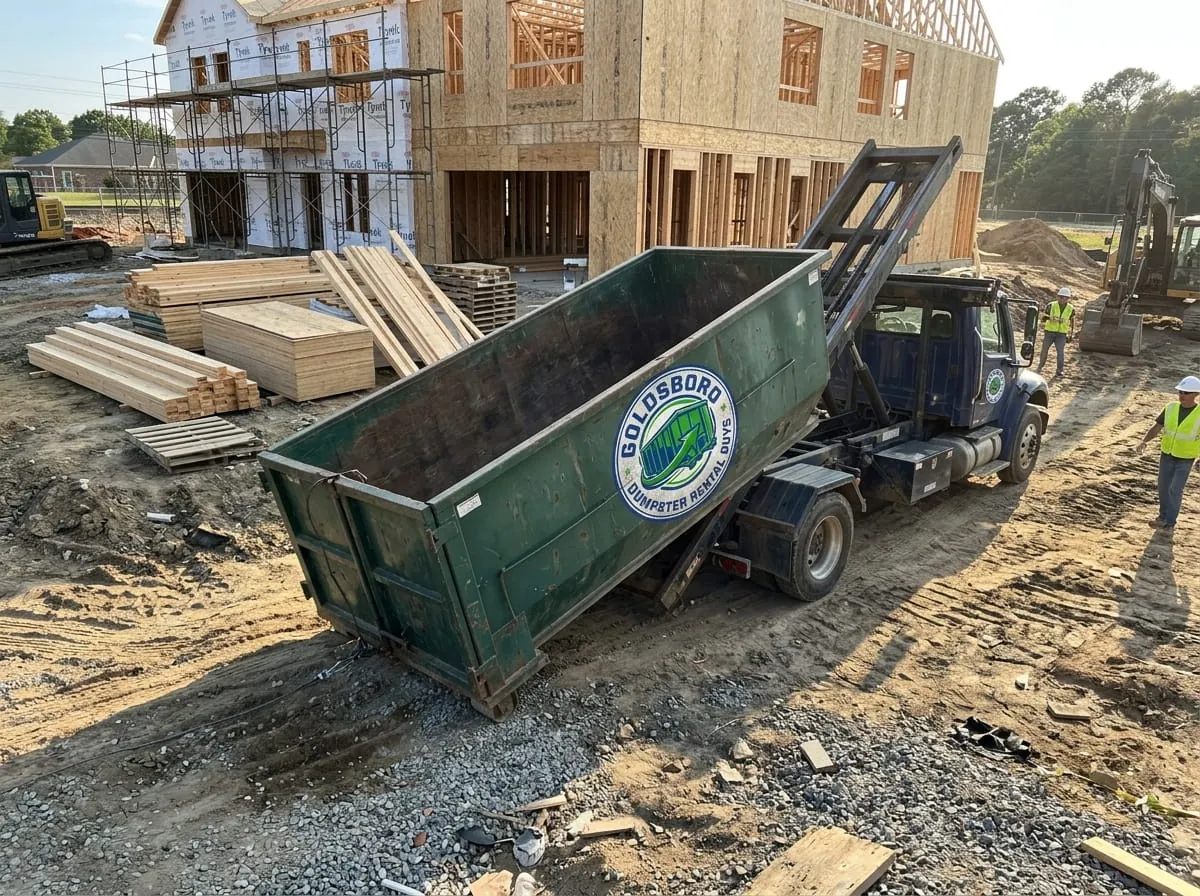
A roll-off dumpster is one of the heaviest things that will ever sit in your driveway. An empty 20-yard container already weighs a few thousand pounds, and once you fill it with shingles, concrete, or wet renovation debris, the whole load can push past six or eight tons resting on a handful of small steel contact points. Add the delivery truck rolling up the drive and the lifting arm setting the box down, and it is easy to see why driveways occasionally come away with scuffs, cracks, stains, or ruts. The good news is that nearly all of that damage is preventable with a little planning. At Goldsboro Dumpster Rental Guys we protect customer driveways every single day, and most of the steps are simple enough that you can help set your own property up for a clean, damage-free rental.
Why Roll-Offs Can Mark or Crack a Driveway
The problem is almost never the total weight by itself. It is how that weight is concentrated. A roll-off container does not sit flat on its whole floor. It rests on a few narrow steel rails and the two rear wheels, so all those tons funnel down through contact points that might be only a few square inches each. That is enormous pressure in a very small footprint, and it is exactly the kind of load that leaves its mark on different surfaces in different ways.
- Concrete: Modern residential concrete is strong in the middle of a slab but weak at edges, control joints, and anywhere the base underneath has settled. A point load dropped on a weak spot, or a box slid across the surface, can chip an edge or start a crack.
- Asphalt: Asphalt is a flexible pavement held together by petroleum binder, and that binder softens dramatically in heat. On a blazing Eastern North Carolina afternoon the surface can get soft enough that steel wheels and rails press divots and ruts straight into it.
- Gravel and sand: Loose or sandy drives have no rigid surface at all. The container simply sinks until it finds something firm, which is how you end up with ruts, displaced stone, and a box that has settled at an angle.
On top of the structural concern, there is cosmetic marking. Steel that has been sitting outside picks up rust, and a little rust plus a little rain can leave orange staining on light concrete. Dragging a container during delivery or pickup can also leave dark scuff lines. None of this means a roll-off is unsafe for your driveway. It just means the surface deserves a bit of protection, the same way you would slide furniture pads under a heavy appliance.
Boards and Plywood: The Single Best Protection
If you remember one thing from this article, make it this: put something between the steel and your driveway. Laying boards under the contact points is the most effective, lowest-effort way to protect any surface, and it is standard practice for a careful hauler. The whole idea is to spread the load. A thick board or a sheet of plywood takes the pressure from those tiny steel contact points and distributes it across a much larger area, so instead of eight tons pressing through a few square inches, it presses through several square feet.
Here is what works well under a residential roll-off:
- Two-by material or thick planks laid under the rear wheels, where most of the loaded weight sits once the box is on the ground.
- Three-quarter-inch exterior plywood under the front rails and anywhere the container frame touches down. Half-inch is better than nothing, but three-quarter holds up to repeated loading without cracking.
- Old scrap lumber if you have it. It does not need to be pretty. It needs to be solid, flat, and wide enough to catch the contact point even if the box settles slightly.
Set the boards where the wheels and rails will land before the box comes off the truck, not after. Our drivers plan the drop so the container lands squarely on the protection, and because we know roughly where the contact points sit on each size container, we can position everything in advance. If you are renting from us, you do not have to supply anything, we bring protection as a matter of course, but if you have a drive you are especially proud of, it never hurts to mention it when you book so we come prepared for your exact surface.
Weight Distribution and How You Load It
Protecting the driveway is not only about the moment of delivery. How you load the dumpster changes how weight sits on your surface for the entire rental, which in Goldsboro might be a week or more of a loaded box baking in the sun. A container packed heavy on one end concentrates even more force on the rails under that end. A few habits keep the load balanced:
- Spread heavy material like concrete, dirt, brick, and shingles evenly across the floor rather than piling it at the door end.
- Load the heaviest items first and lowest, then fill lighter debris on top.
- Never overfill past the rim. An overloaded box is not only unsafe and often illegal to haul, it also puts more sustained pressure on your driveway and on whatever is under those wheels.
If you are not sure which container size matches your project and its weight, our guide on what size dumpster you need walks through it, and for a tighter driveway a compact option like a 10-yard dumpster keeps the footprint and the loaded weight down while still handling most cleanouts and small remodels.
Eastern North Carolina Heat and Soft Asphalt
Goldsboro summers are no joke. Long stretches of upper-ninety-degree heat with heavy humidity are normal from June into September, and that climate is hard on asphalt. The binder that holds an asphalt driveway together goes soft when the pavement surface temperature climbs, and on a sunny afternoon that surface can run far hotter than the air temperature. A roll-off dropped onto soft asphalt can leave permanent depressions where the wheels and rails pressed in, and the marks only set harder once the pavement cools.
This is where boards earn their keep the most. Spreading the load across plywood instead of letting steel bite into warm asphalt is often the difference between a clean rental and a driveway with two permanent dents. A few more heat habits help:
- Schedule a morning delivery when you can. Dropping the box early, before the pavement has soaked up a full day of sun, means the asphalt is firmer when it takes the load.
- Leave the protection in place for the whole rental on asphalt. The container is going to sit through several hot afternoons, so the boards need to stay under it the entire time, not just at drop-off.
- Watch newer asphalt especially. A drive that was sealed or paved in the last year or two is softer and more prone to marking than older, fully cured pavement.
Gravel, Sand, and the Coastal-Plain Soil Around Wayne County
Plenty of homes around Goldsboro, and especially out in rural Wayne County, sit at the end of long gravel or sandy driveways, and the county sits on flat coastal-plain soil that is sandy and drains in a particular way. That changes the driveway conversation entirely. A gravel or sandy drive has no rigid surface to crack, so the risk is not cracking, it is sinking, rutting, and a box settling off level.
On loose surfaces the approach shifts toward building a firm footing under the container:
- Use wider, thicker boards or multiple sheets of plywood under the wheels to create a broad pad the box can rest on without burrowing into the stone or sand.
- Pick the firmest, flattest spot available. A packed section of a gravel drive carries a roll-off far better than a soft shoulder or a spot where water collects.
- Avoid the very edge of a gravel drive where the stone thins out onto grass or sand, because that is where a loaded box will lean and rut.
Firm, dry sand can actually hold a well-supported container reasonably well. The trouble starts when that sandy soil gets soaked, which around here it regularly does.
Rain, Saturated Ground, and Hurricane Season
Eastern North Carolina gets heavy rain, summer thunderstorms, and the occasional tropical system or hurricane that dumps inches of water in a day. Saturated coastal-plain soil loses a lot of its bearing strength, and sandy ground that held a container fine last week can turn soft and unstable after a downpour. A roll-off that was sitting level on a dry drive can sink and rut once the ground underneath it is soaked, and pulling a stuck or settled box out of soft ground is how deep ruts and torn-up lawns happen.
During wet stretches and storm season, a few extra precautions pay off:
- Keep the container on the firmest surface you have and off saturated grass or soft shoulders entirely.
- Build up the footing with extra boards or plywood so the load is spread even wider when the ground is wet.
- Plan around the forecast. If a big system is coming, talk to us about timing delivery or pickup so the box is not being set down or dragged out across soaked ground at the worst moment.
After a hurricane there is often a rush to get dumpsters out for storm cleanup, and we are glad to help, but it is worth remembering that the ground is at its softest right after heavy rain. Giving a drive a day to drain, or beefing up the boards, protects both the surface and your lawn.
Backing, Loading, and Pickup Care
A fair amount of driveway damage happens in motion rather than at rest. The delivery truck has to back up the drive, and the lifting mechanism slides the container off and later drags it back on. Done carelessly, that is where you get scuff lines, cracked slab edges, and stone scattered off a gravel drive. Done carefully, it leaves no trace. A good operator backs slowly along the strongest line of the drive, avoids cranking the wheel hard on concrete, which can scrub and mark it, and uses the boards as a landing pad so the box rolls onto protection rather than bare surface. At pickup the same care applies in reverse, easing the container back onto the truck instead of yanking it across the driveway.
Goldsboro Driveways: New Subdivisions to Country Drives
Every part of the Goldsboro area brings its own driveway to protect. The newer subdivisions going in around the city tend to have fresh concrete drives, which look great but have young slabs and sometimes settled base material near the edges, so point loads and edge contact are the things to watch. Older neighborhoods closer to downtown often have asphalt that has seen plenty of summers and softens in the heat. And out in the county, long gravel and sandy drives on flat coastal-plain lots call for a firm footing and smart placement far more than crack protection. A hauler who knows the local ground can read your specific driveway and set the box accordingly rather than treating every surface the same.
What a Good Hauler Does Automatically
When you rent from a careful, local company, most of this should happen without you lifting a finger. Here is what you should expect as standard:
| Step | What we do |
|---|---|
| Before delivery | Ask about your surface and the drop spot, and plan the approach |
| At drop-off | Lay boards or plywood under the wheels and contact points |
| Placement | Set the box level on the firmest, flattest part of the drive |
| Backing and loading | Move slowly along the strongest line, no hard wheel scrubbing |
| Pickup | Ease the container back on, protection stays put until the box is gone |
You can help by clearing the drop spot, pointing out any soft areas, cracks, or sprinkler heads, and loading the box evenly. Everything else is on us. If you want to see the full range of what we handle, take a look at our roll-off dumpster rental and residential dumpster rental services, both of which include the careful placement and driveway protection described here.
Protecting Your Driveway Starts With the Right Hauler
A roll-off dumpster and a nice driveway get along just fine when the container is set down the right way. Spread the load with boards, mind the heat on asphalt, build a firm footing on gravel and sand, watch the ground during wet weather, and work with a hauler who backs and lifts with care. Follow those points and the only thing left behind when the box is gone is an empty, undamaged driveway. If you are planning a cleanout, remodel, roof tear-off, or storm cleanup anywhere in Goldsboro or Wayne County and want it handled with your property protected from start to finish, call Goldsboro Dumpster Rental Guys at (984) 305-2117 or reach us through our contact page, and we will get the right container placed the right way.

Owner, Goldsboro Dumpster Rental Guys — sharing straight advice from years of local hauling across Goldsboro and Wayne County.
Frequently Asked Questions
Will a roll-off dumpster crack my concrete driveway?
It is very unlikely when the container is set down correctly. Cracking usually happens only when the concentrated steel contact points land on a weak edge, a control joint, or a settled spot with no protection under them. Laying boards or plywood under the wheels and frame spreads the load across a much larger area, which is why a careful hauler protects the surface as standard. Clearing the drop spot and loading the box evenly also keeps the pressure balanced on your slab.
What should I put under a dumpster to protect my driveway?
Use thick two-by planks or three-quarter-inch exterior plywood laid under the rear wheels and under the container rails where the frame touches down. The goal is to spread the weight so no single steel point presses directly into the surface. Set the boards in place before the box comes off the truck so it lands squarely on them. If you rent from us we bring and position the protection for you, so you do not need to supply anything.
Can summer heat in Goldsboro damage my asphalt driveway under a dumpster?
Yes. Asphalt binder softens in the heat, and on a hot Eastern North Carolina afternoon the pavement surface can get soft enough that steel wheels and rails press permanent dents into it. Protect against this by always keeping boards or plywood under the contact points, leaving that protection in place for the entire rental since the box sits through several hot days, and scheduling a morning delivery when you can so the asphalt is firmer. Newer asphalt is softer and needs extra care.
I have a gravel or sandy country driveway. Can I still get a dumpster?
Absolutely, and many Wayne County homes have gravel or sandy drives. On a loose surface the risk is sinking and rutting rather than cracking, so the fix is building a firm, wide footing under the container with thicker boards or multiple sheets of plywood and choosing the firmest, flattest part of the drive. Dry packed gravel or firm sand holds a well-supported box well. Avoid soft shoulders and the thin edges of the drive where a loaded container will lean.
What happens if it rains or we are in hurricane season when the dumpster is delivered?
Saturated coastal-plain soil and wet sand lose bearing strength, so a box that sat level on dry ground can sink and rut after heavy rain. During wet stretches and storm season we keep the container on the firmest surface available, build up the footing with extra boards, and plan delivery or pickup timing around the forecast so the box is not being dragged across soaked ground. If you need storm cleanup right after a hurricane, call us and we will set it up to protect both your driveway and your lawn.