If you are reading this, you are probably standing in the quiet of a loved one's home in Wayne County, looking at a lifetime of belongings and wondering where on earth to begin. Maybe it is the family farmhouse off a country road outside Goldsboro, with a packed shed, a barn, and a tobacco outbuilding that has not been emptied in forty years. Maybe you are coordinating everything by phone from a base in another state. Whatever your situation, take a breath. An estate cleanout is not a race, and you do not have to do it all in one weekend. This checklist is here to give you a clear, humane order of operations so the task feels less like a mountain and more like a series of manageable steps.
First, Slow Down and Secure the Home
Before a single box is moved, your first job is simply to protect the property and the people who have a stake in it. Grief and logistics do not mix well, and the most common regret we hear from families is that they threw something away too quickly. So the opening move is always the same: secure, do not discard.
- Lock it down. Change or secure the locks if many people had keys, and make sure windows and outbuildings are closed. Empty homes attract trouble, especially rural farmsteads set back from the road.
- Keep utilities on for now. You will want lights, heat or air, and water while you work. Note when bills are due so nothing lapses before the estate is settled.
- Protect the valuables you can see. Jewelry, firearms, cash, collectibles, and small electronics should be gathered and stored safely before anyone else walks through. This is not about distrust; it is about removing temptation and confusion.
- Photograph each room. A quick phone walkthrough video gives out-of-town heirs a shared reference and protects everyone if questions come up later.
Find the Documents Before Anything Else Moves
Paperwork is the part people most wish they had handled first. In older Eastern North Carolina homes, important documents hide everywhere: in dresser drawers, taped under desks, tucked inside Bibles, folded into cookbooks, or stored in a bank deposit box. Set aside an afternoon purely for a document hunt before any heavy clearing begins.
Look for the will, deeds and land records, vehicle titles, insurance policies, bank and investment statements, tax returns, military discharge papers (DD-214), Social Security information, and any pre-planned funeral arrangements. Gather them into one labeled container and keep it with you, not in the house. These papers are what the executor and the court will need, and in the rush of clearing a home they are heartbreakingly easy to toss with the junk mail.
Understand the Executor's Role and the Probate Timeline
In North Carolina, an estate is usually administered through the Wayne County Clerk of Superior Court, which serves as the probate authority here in Goldsboro. The person named in the will as executor (or appointed as administrator if there is no will) is the one with legal authority to distribute and dispose of property. If that is you, do not feel you have to act instantly. If it is someone else, coordinate with them before you clear anything of value.
A few practical points families in Wayne County should keep in mind:
- Wait for authority. The executor should be formally qualified by the Clerk of Superior Court before major assets are sold or given away. Clearing out obvious trash is fine; dispersing heirlooms and valuables is not, until the estate is properly opened.
- Keep a simple log. Note what leaves the home and where it goes: donated, sold, given to a named heir, or disposed of. This record protects you and keeps distant family in the loop.
- Mind the real estate timeline. If the home will be sold, cleanout usually needs to finish before listing, which gives you a natural deadline to plan backward from.
None of this is legal advice, and for anything complicated an estate attorney is worth the call. But knowing that probate runs through the local Clerk's office helps you set a realistic pace rather than panicking.
The Heart of It: Sorting Keep, Distribute, Donate, Sell, Dispose
Once the home is secure and the papers are safe, the real work begins: deciding what happens to everything else. The cleanest method is to assign every item to one of five piles. Work one room at a time so you always have a sense of progress, and give yourself permission to stop when the day gets heavy.
Keep
These are the pieces that hold memory or meaning for you and the immediate family: photographs, letters, a grandmother's quilt, a pocketknife, the family Bible. Keep is often the smallest pile, and that is okay. You cannot save everything, and the love does not live in the object.
Distribute
Items promised to or wanted by specific heirs. This is where out-of-town and military family members especially need a voice. Share your room photos and videos, let each person flag what matters to them, and label those items clearly before anything moves. A shared online photo album works wonders when relatives are scattered across the country.
Sell
Furniture in good condition, tools, farm equipment, vehicles, and genuine antiques can carry real value. Eastern NC farmsteads often hold quality hand tools, cast iron, and solid-wood furniture that collectors want. Options include a local estate sale company, consignment shops around Goldsboro, online marketplace listings, or an auction house for higher-value lots. If you are unsure whether something is valuable, get it looked at before it goes.
Donate
Usable clothing, housewares, books, and furniture that will not sell can do real good locally. Area thrift and charity organizations in the Goldsboro and Wayne County region accept gently used goods, and many will arrange pickup for larger furniture. Keep donation receipts; they may matter for the estate's taxes.
Dispose
This is the largest pile in almost every estate cleanout, and it is the one a dumpster is built for. Broken furniture, worn mattresses, water-damaged boxes, decades of accumulated clutter in the attic and outbuildings, old carpet, and general debris all land here. Setting these items near the driveway as you go makes the final haul-away fast and painless.
What Size Dumpster for an Estate Cleanout?
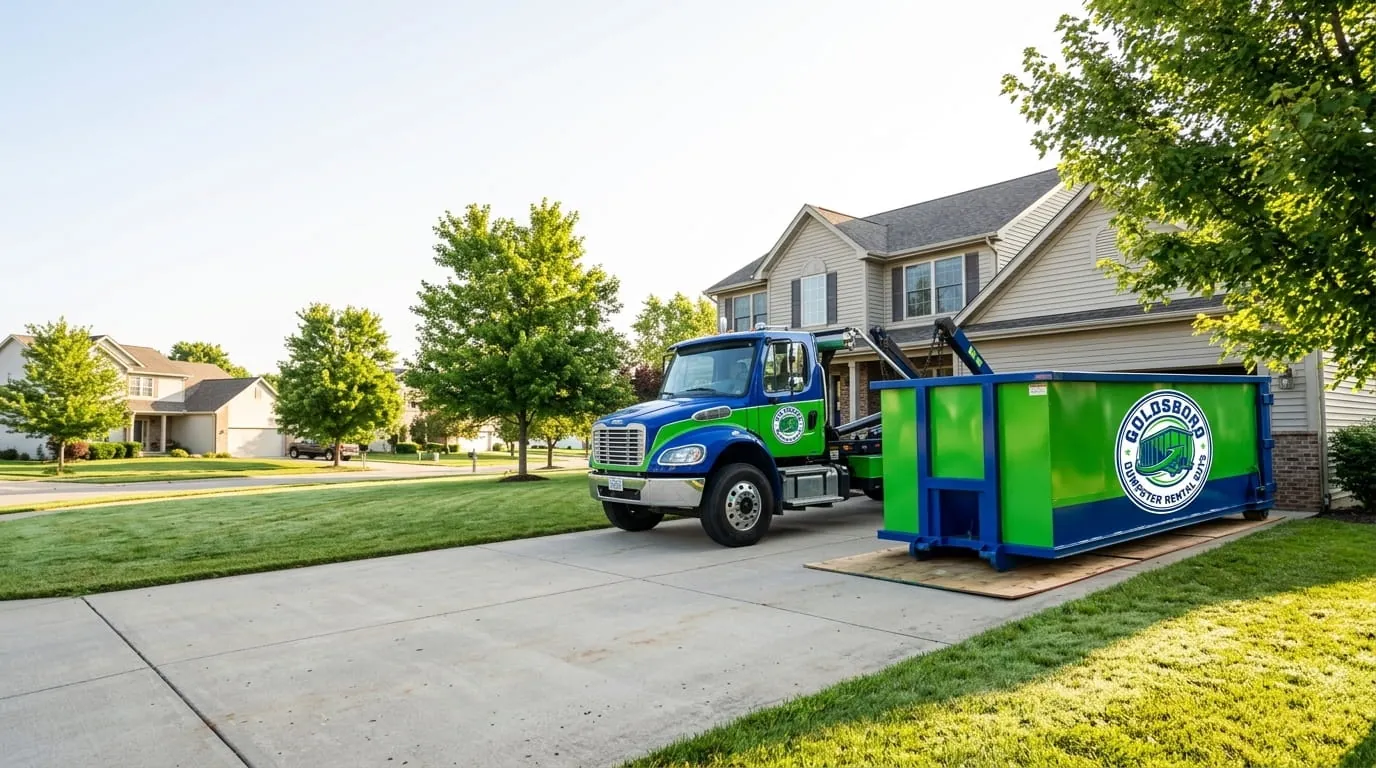
Most whole-home estate cleanouts in Wayne County call for a larger container than people expect, simply because decades of belongings add up and the barns and sheds hold more than anyone remembers. For a typical three-bedroom home plus a shed or two, a 20-yard dumpster is the workhorse choice. It holds a substantial amount of mixed household debris and furniture while keeping a low profile on the property.
The good news for Goldsboro-area families is access. Most homes here sit on flat lots with wide driveways and plenty of room, so a roll-off can be dropped close to the door without squeezing past landscaping or navigating a steep grade. If the estate includes a full farmstead with packed outbuildings, you may want a second haul or a larger container; we are happy to talk through the right fit before you book. When you would rather not touch the heavy, dirty items yourself, our junk removal service can load and carry them for you, and our full estate cleanout service is designed exactly for situations like this.
Pacing Yourself Emotionally
No checklist is complete without this reminder: you are grieving while you work, and that is allowed to slow you down. Sorting a parent's clothes or finding a note in familiar handwriting can stop you cold, and it should. Build breaks into the plan. Bring a sibling or a friend for the hard rooms. Start with a neutral space like the garage or a storage shed rather than the bedroom, so you can find a rhythm before you reach the tender places.
If family tensions flare over who gets what, lean on the executor and the simple log to keep decisions calm and documented. And if the whole thing feels like too much, that is not a failure. It is a signal that it may be time to bring in help.
When to Hire Help
Plenty of families handle an estate cleanout themselves, and a well-placed dumpster is often all they need. But consider professional help when:
- You are coordinating remotely and cannot be on site to sort and haul.
- The home or outbuildings are packed to the point of being overwhelming.
- There are mobility, health, or safety concerns with heavy lifting, old barns, or hoarding conditions.
- A tight real estate or probate timeline leaves no room for a slow do-it-yourself pace.
- The emotional weight simply makes it too hard to do alone.
For a room-by-room system you can print and follow, our home cleanout checklist pairs perfectly with this guide. When you are ready to talk it through with a real person who understands Wayne County homes, reach out to us or call (984) 305-2117. We will help you choose the right container, time the drop-off, and take the heaviest part of this off your shoulders.
A Gentle Final Word
Clearing a loved one's home is one of the last things you will ever do for them, and doing it with care matters more than doing it fast. Secure first, find the papers, honor the memories worth keeping, pass along what others will treasure, give generously to the community, and let the rest go. When the dumpster hauls away that final load and the rooms stand empty, you will have carried something heavy with grace. If you need a hand with any part of it, the team at Goldsboro Dumpster Rental Guys is a phone call away at (984) 305-2117.

Owner, Goldsboro Dumpster Rental Guys — sharing straight advice from years of local hauling across Goldsboro and Wayne County.
Frequently Asked Questions
What should I do first in an estate cleanout?
Secure the home and protect valuables before moving anything. Lock the house and outbuildings, gather jewelry, firearms, cash, and collectibles into safe storage, keep utilities on while you work, and photograph each room for out-of-town heirs. Then hunt down important documents such as the will, deeds, titles, and insurance papers before any heavy clearing begins. The biggest regret families share is throwing something away too soon, so the rule is always secure first, discard later.
What size dumpster do I need to clean out an estate in Goldsboro?
For a typical three-bedroom Wayne County home with a shed or two, a 20-yard dumpster is the usual choice. It holds plenty of mixed household debris and furniture while staying compact on the property. Most Goldsboro-area lots are flat with wide driveways, so a roll-off drops close to the door easily. Full farmsteads with packed barns and tobacco outbuildings may need a larger container or a second haul. Call (984) 305-2117 and we will help you match the size to the home.
How does North Carolina probate affect clearing out the house?
In Goldsboro, estates are administered through the Wayne County Clerk of Superior Court. The executor named in the will, or an appointed administrator, holds legal authority to distribute and dispose of property, and should be formally qualified before major assets are sold or given away. You can remove obvious trash right away, but hold off on dispersing heirlooms and valuables until the estate is properly opened. Keep a simple log of what leaves the home. For anything complex, an estate attorney is worth the call.
What can I donate or sell from an estate instead of throwing it away?
Quite a lot. Furniture in good condition, tools, farm equipment, vehicles, and genuine antiques often carry real value and can go through a local estate sale company, Goldsboro-area consignment shops, online marketplaces, or an auction house for higher-value lots. Usable clothing, housewares, books, and furniture that will not sell can be donated to area thrift and charity organizations, many of which pick up larger items. Keep donation receipts for the estate's taxes, and only the broken, worn, and unusable items need the dumpster.
Should I hire help or handle the estate cleanout myself?
Many families manage with just a well-placed dumpster, but consider professional help if you are coordinating remotely, the home and outbuildings are overwhelmingly full, there are mobility or safety concerns, or a tight probate or real estate timeline leaves no room for a slow pace. The emotional weight alone is a valid reason to bring in help. Our estate cleanout and junk removal services can load and haul the heaviest items for you. Call (984) 305-2117 to talk it through.